
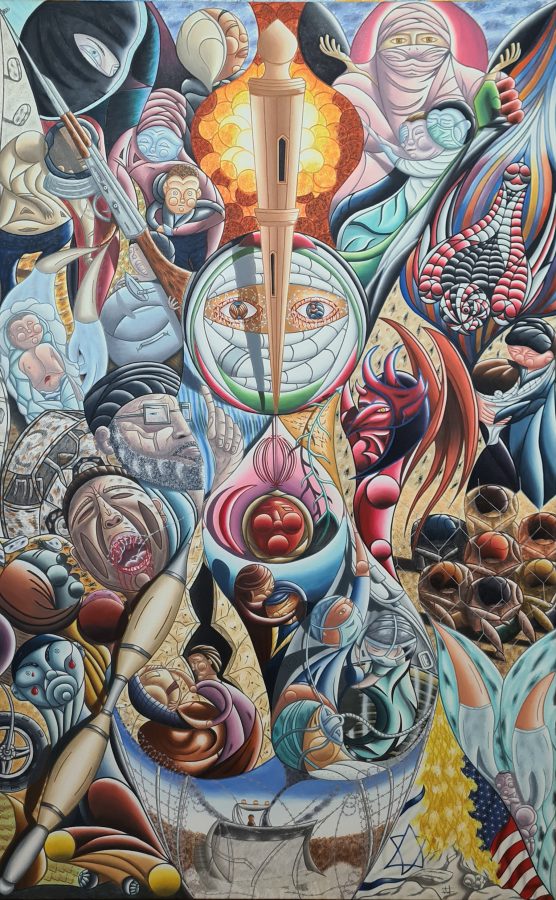
A dense and harrowing vertical axis defines the composition of this oil painting, where the artist employs a complex prismatic fragmentation to map the multifaceted layers of a deeply entrenched historical struggle. Technically, the work is a staggering display of compartmentalized realism, where every figure, weapon, and architectural element is fused into a singular, vibrating entity. The handling of volume is remarkably intense, utilizing sharp tonal shifts and internal gradients within each geometric cell to grant the subjects a tectonic solidity, as if the weight of the conflict has been physically etched into the very anatomy of the participants.
The palette is characterized by a vibrant and highly saturated contrast, where the cooling blues of the sky and traditional garments clash against the searing ochres of the desert and the visceral reds of upheaval. Light in this work does not offer a gentle illumination; instead, it acts as a clinical, searching force that exposes the raw vulnerability of the infants and the stark rigidity of the armaments. This luminous intensity, paired with a multifocal perspective, creates a sense of immense magnitude, allowing the eye to navigate through a labyrinth of simultaneous tragedies and symbolic confrontations that span from the scorched earth to the celestial heights.
Compositionally, the piece is organized around a central, totemic silhouette that bridges the gap between sacred architecture and modern technology, suggesting an inextricable link between faith, territory, and defense. Through concrete elements—such as the grieving mothers, the watchful eyes within geometric orbs, and the fragmented symbols of national identity at the base—the work transmits abstract concepts of collective trauma, spiritual endurance, and the unyielding gravity of sovereignty. The symmetry of the piece underscores a sense of tragic equilibrium, where the density of the iconography reflects a landscape where every inch of space is saturated with historical and religious significance.
Narratively, „Gaza“ serves as a monumental meditation on the human condition in the face of an enduring cycle of discord. By synthesizing the chaos of the front lines with the timeless motifs of protection and loss, the artist transcends a purely political chronicle to capture a vision of universal sorrow and resilience. The work’s magnitude lies in its ability to present the viewer with a choral narrative of suffering and hope, where the shattered architecture and the intertwined lives create a powerful, albeit somber, allegory of a world seeking sanctuary amidst the persistent echoes of its own divisions.