
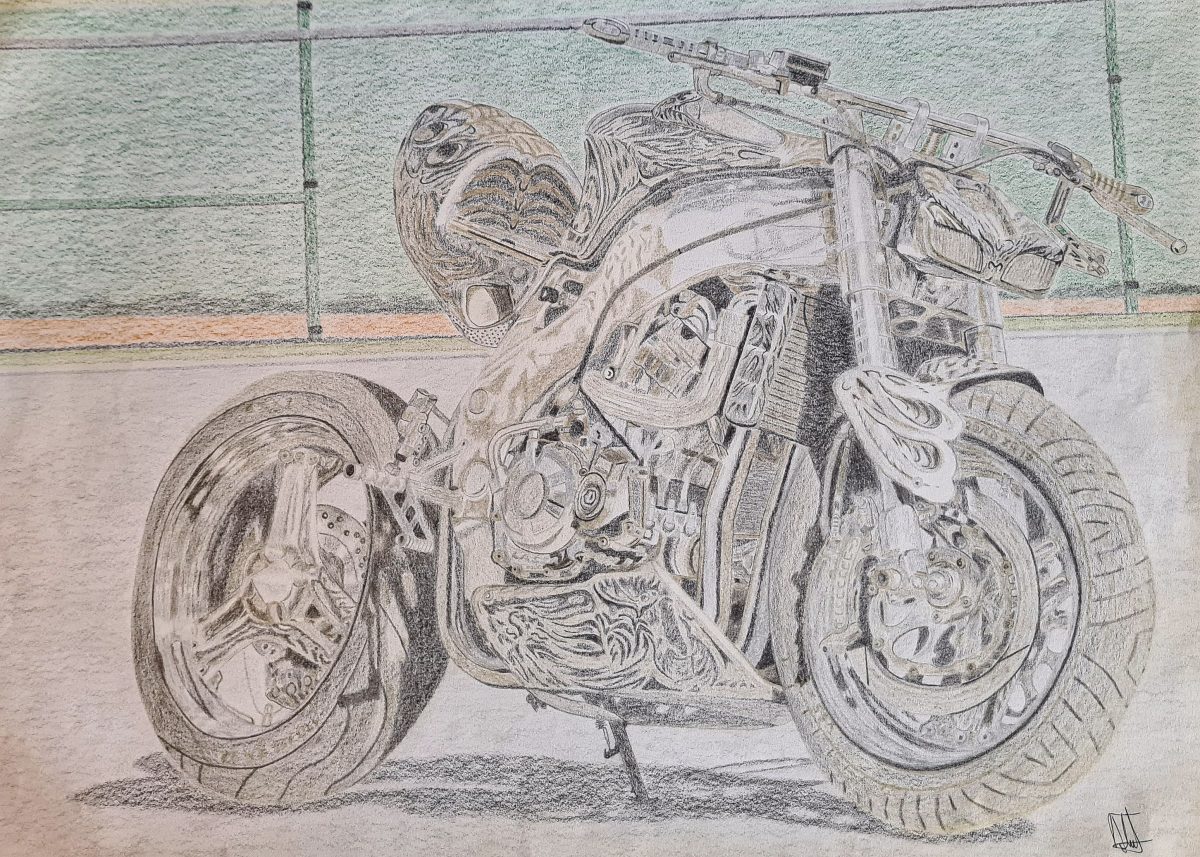
In this intricate graphite study, the artist delves into the complex aesthetics of mechanical engineering, presenting the "Streetfighter" not merely as a vehicle, but as a masterpiece of industrial design. The work demonstrates an exceptional command of linear precision and tonal modeling, where the cold, hard surfaces of the engine and chassis are rendered with a sculptural intensity. By utilizing a sophisticated stippling and hatching technique, the artist manages to articulate the diverse textures of the machine—from the granular matte of the engine block to the sleek, polished curvature of the fuel tank—creating a tactile depth that invites the viewer to explore every mechanical facet.
The composition is grounded by a low-angle perspective, which grants the motorcycle a monumental and almost sentient presence. The artist’s decision to leave the bodywork primarily in high-key white values, while focusing the densest graphite work on the internal mechanics, creates a fascinating visual hierarchy. This approach emphasizes the "naked" philosophy of the streetfighter style, stripping away the superfluous to reveal the raw, rhythmic complexity of the gears, bolts, and cooling fins. The subtle, textured background provides a soft horizontal counterpoint to the aggressive, diagonal thrust of the motorcycle’s stance, ensuring the subject remains the undisputed protagonist of the frame.
Beyond its technical rigor, the drawing resonates with a quiet reverence for the power and precision of modern machinery. There is an inherent stillness in the piece that contrasts with the latent speed the "Streetfighter" represents, capturing the machine in a state of tranquil readiness. The artist’s hand transforms cold metal into a study of form and shadow, bridging the gap between clinical documentation and fine art. It is a compelling testament to contemporary realism’s ability to find beauty in the utilitarian, celebrating the machine as a symbol of human ingenuity and the unyielding spirit of the road.